Executive Summary (TL;DR):
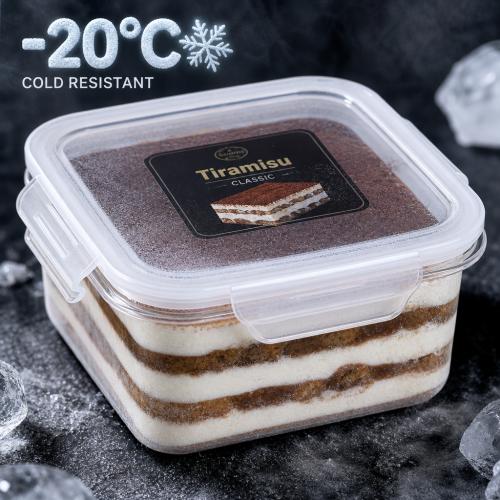
Commercial bakery plastic packaging predominantly utilizes food-grade PET (offering 2–3x the impact resistance of standard paperboard) and PP (temperature-resistant down to -20°C). Engineered features such as high-dome lids, modular cavity dividers, and hermetic snap-lock seals reduce transit damage rates from 15% to under 5%, while nested stackability saves over 80% in warehouse storage space.
1. Material Performance Analysis: PET vs. PP Structural Integrity
During commercial transit and delivery, material stiffness and thermal tolerance determine pastry preservation. Food-grade PET and PP offer distinct operational advantages:
| Evaluation Metric | Food-Grade PET (Polyethylene Terephthalate) | Food-Grade PP (Polypropylene) | Traditional Paperboard |
|---|---|---|---|
| Impact Resistance | Ultra-High (2–3x standard paper) | High (Superior flexural fatigue) | Moderate (Prone to moisture collapse) |
| Temperature Range | 0°C to 60°C (Ambient to Chilled) | -20°C to 120°C (Deep Freeze to Heat) | Dry Ambient |
| Optical Clarity | Crystal Clear (High-gloss display) | Translucent / Semi-Opaque | Opaque (Requires film window) |
| Transit Damage Rate | < 5% | < 5% | ~15% |
| Best-Fit Bakery Items | Mousse cakes, fruit tarts, palmiers, macarons | Tiramisu, frozen cheesecakes, lava pastries | Dry breads, room-temperature cookies |
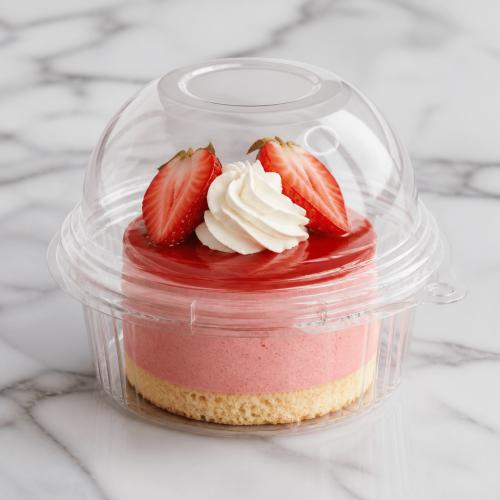
- PET Material Properties: High tensile strength and rigid structure protect delicate cream pipings and brittle laminations (such as almond tuiles and mille-feuille) from crushing during multi-mile delivery.
- PP Material Properties: Retains molecular ductility without cold-cracking at temperatures down to -20°C, making it optimal for blast freezing, frozen logistics, and long-term cold storage.
2. Structural Engineering: Precision Pastry Defense
To accommodate varying pastry textures, vertical dimensions, and filling viscidities, commercial plastic containers utilize purpose-built structural geometries:
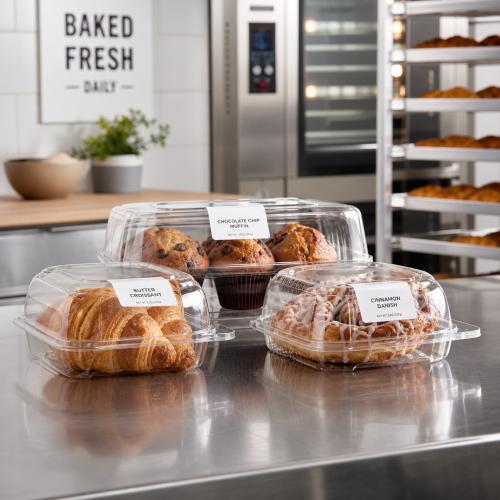
- High-Dome Lids: Provide ample vertical clearance to eliminate lid contact with fondant figurines, layered fruit toppings, and high-piped whipped cream.
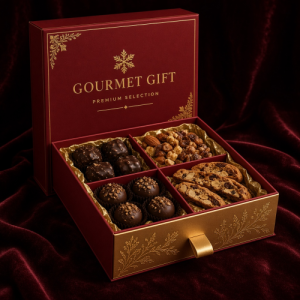
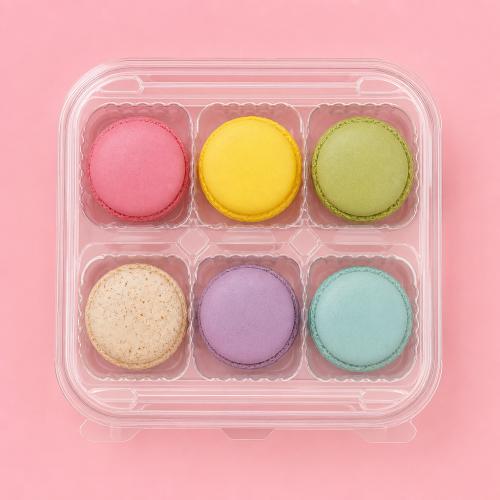
- Recessed Cavities & Grid Dividers: Secure individual portions (such as macarons, petit fours, and cookies) into dedicated slots, preventing internal sliding, surface scuffing, and aesthetic degradation.
- Hermetic Snap-Lock & Silicone Gasket Seals:
- Prevent external humidity ingress, maintaining the crisp texture of crusts and the density of sea-salt cream tops.
- Prevent leaks from molten lava fillings, custard-filled choux, and berry purees.
- Smooth-Edged Perimeter Trimming: Eliminates burrs and sharp edges to prevent pastry snagging during packing while enhancing consumer unboxing ergonomics.
3. Specifications & Commercial Application Matrix
Standardized dimensional configurations tailored for individual consumption, retail display, and multi-tier delivery:
| Size Category | Reference Dimensions ($L \times W \times H$) | Target Application | Compatible Bakery Items |
|---|---|---|---|
| Small (Single-Serve) | 10 cm × 10 cm × 8 cm | Individual grab-and-go, retail favors | Financiers, madeleines, cupcakes, daifuku mochi |
| Medium (Sharing Pack) | 15 cm × 20 cm × 9 cm | Afternoon tea sets, dual portions | Sliced layer cakes, dessert sandwiches, Swiss roll cuts |
| Large (Tiered Display) | 25 cm × 25 cm × 12 cm | Celebration cakes, catering platters | 6-inch whole cakes, multi-item party platters |
4. Quantifiable ROI for Bakery Operations & Supply Chains
[Bakery Operational Pain Point]       [Plastic Packaging Solution]          [Quantifiable B2B Benefit]
High Delivery Damage Rate (15%)  ───► Rigid PET/PP Impact Shell      ───► Damage reduced to < 5%
Back-of-House Storage Shortage   ───► Precision Tapered Nesting      ───► 80%+ Storage space saved
Peak-Hour Packaging Bottlenecks ───► Tool-Less Snap-Lock Assembly ───► 40% Faster fulfillment speed- Maximized Shelf Appeal: 360-degree high-clarity walls showcase product freshness and color vibrancy without requiring unboxing or auxiliary labeling.
- Optimized Storage Efficiency: High-draft nesting geometry allows empty containers to stack densely, saving up to 80% in back-of-house storage volume.
- Lightweight Load Reduction: High-strength, thin-wall thermoforming cuts gross parcel weight for lower last-mile delivery costs.
5. Frequently Asked Questions (FAQ)
Q1: Why are PET plastic containers preferred over traditional paper boxes for delicate pastries?
A: Food-grade PET provides 2 to 3 times the impact resistance of standard paperboard, forming a rigid protective shell that prevents vertical and lateral crushing. Commercial data indicates that switching to PET containers lowers pastry delivery damage rates from roughly 15% to under 5%.
Q2: Which plastic material is best for frozen and chilled desserts—PET or PP?
A: PP (Polypropylene) is the industry standard for frozen supply chains down to -20°C, as it maintains structural toughness without becoming brittle. For short-term refrigerated retail display (0°C to 8°C), PET is preferred due to its crystal-clear optical transparency.
Q3: How do plastic bakery containers prevent leakage in molten and filled desserts?
A: Commercial bakery containers feature precision-machined snap-lock perimeters and integrated groove seals. This design contains fluid fillings (such as molten chocolate and fruit compotes) while creating a barrier against atmospheric moisture that could otherwise compromise pastry crusts.