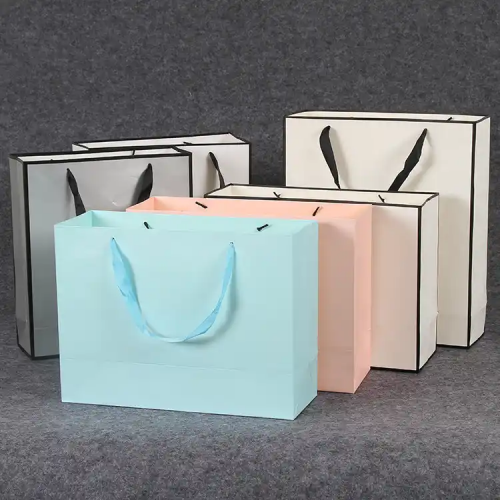

A paper handbag is a common type of paper packaging container, widely used in scenarios such as takeout packaging, clothing packaging, gift-giving, and promotional activities. Its core function is to meet the needs of carrying items through structural design, while also conveying brand information or enhancing visual appeal through printing techniques. Compared to plastic bags, paper bags offer environmentally friendly features such as biodegradability and recyclability, and can be customized to suit various usage scenarios.
I. Technical Principles and Structural Design:
The main structure of a paper handbag is typically made from single-layer kraft paper or white cardstock, formed through processes such as die-cutting, folding, and gluing. Key components include the bag body, handles, and bottom support structure: The bag body is cut into a preset shape using a die-cutting machine (beer machine), the handles are fixed using a rope insertion technique, and the bottom is reinforced with folded or glued stiffeners to improve load-bearing capacity. In terms of printing techniques, screen printing can achieve large-area solid color coverage, hot stamping enhances localized gloss, and the rope insertion technique ensures secure and efficient handle attachment through automated machinery.
II. Customization Applications and Process Implementation:
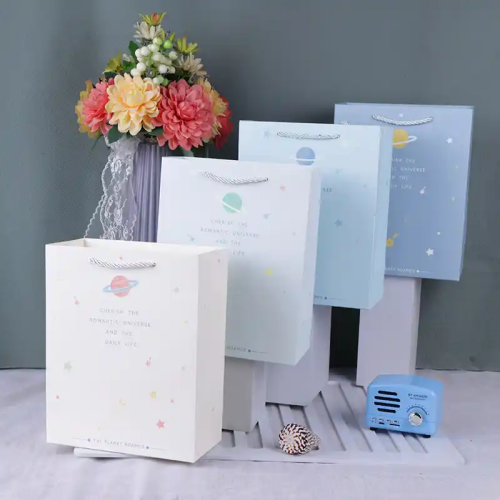
Customization of paper handbags is mainly reflected in appearance design and functional adaptation. On the appearance side, users can choose colors (e.g., blue), patterns, and text content, achieving high-precision printing through devices like printing presses and hot stamping machines. This supports the addition of corporate logos or event themes. Functionally, specifications can be adjusted for different scenarios: Takeout bags require oil- and stain-resistant coatings, clothing packaging may need additional inner cushioning materials, and gift bags can enhance texture through techniques like hot stamping or embossing. The production cycle is typically three days, with a daily capacity of up to 30,000 units, enabling rapid response to bulk orders.

III. Technical Highlights and Practical Performance:
Compared to traditional packaging solutions, the technical advantages of paper handbags lie in their environmental friendliness and process flexibility. The material uses biodegradable paper, reducing plastic pollution, while the process supports on-demand customization—from single-color printing to multi-process combinations (e.g., hot stamping + die-cutting). In exhibition settings, customized paper bags can serve as mobile advertisements, attracting attention through visual design. In everyday use, their load-bearing capacity can stabilize items weighing 3–5 kilograms, and the handle design aligns with ergonomics to reduce fatigue during prolonged carrying.
IV. Usage Scenarios and Precautions:
Paper handbags are suitable for multiple fields, including retail, catering, gifting, and promotion. In retail, they package goods; in catering, they replace single-use plastic bags; in gifting, they convey brand value through customized designs. Users should avoid overloading (recommended not to exceed the labeled weight limit), opt for moisture-resistant coatings in humid environments, and store them in dry, ventilated conditions to prevent paper deformation. For bulk buyers, it is advisable to confirm printing techniques and production cycles in advance to ensure delivery aligns with usage needs.
IV. Usage Scenarios and Precautions: Paper handbags are suitable for multiple fields, including retail, catering, gifting, and promotion. In retail, they package goods; in catering, they replace single-use plastic bags; in gifting, they convey brand value through customized designs. Users should avoid overloading (recommended not to exceed the labeled weight limit), opt for moisture-resistant coatings in humid environments, and store them in dry, ventilated conditions to prevent paper deformation. For bulk buyers, it is advisable to confirm printing techniques and production cycles in advance to ensure delivery aligns with usage needs.